💡 Note: This guide is part of our digital growth education series. We update it periodically as new insights and tools emerge.
Introduction: Scaling — Moving from Zero-Cost to Targeted Investment
You’ve built your $0 foundation and secured your first five high-value customers. That achievement is not the finish line — it is the proof that your system works.
The revenue and testimonials you’ve earned now serve a new purpose: funding predictable growth.
This article introduces Phase Two Marketing — the transition from pure zero-cost effort to calculated, high-ROI investment. We call this transition the Scalability Bridge.
Scaling is not about spending more money. It’s about investing a small, controlled budget into traffic that feeds a proven conversion system.
Systemic Truth of Growth:
Traffic without conversion creates chaos.
Conversion without traffic leads to stagnation.
Phase Two exists to balance both — maximizing ROI while minimizing waste.
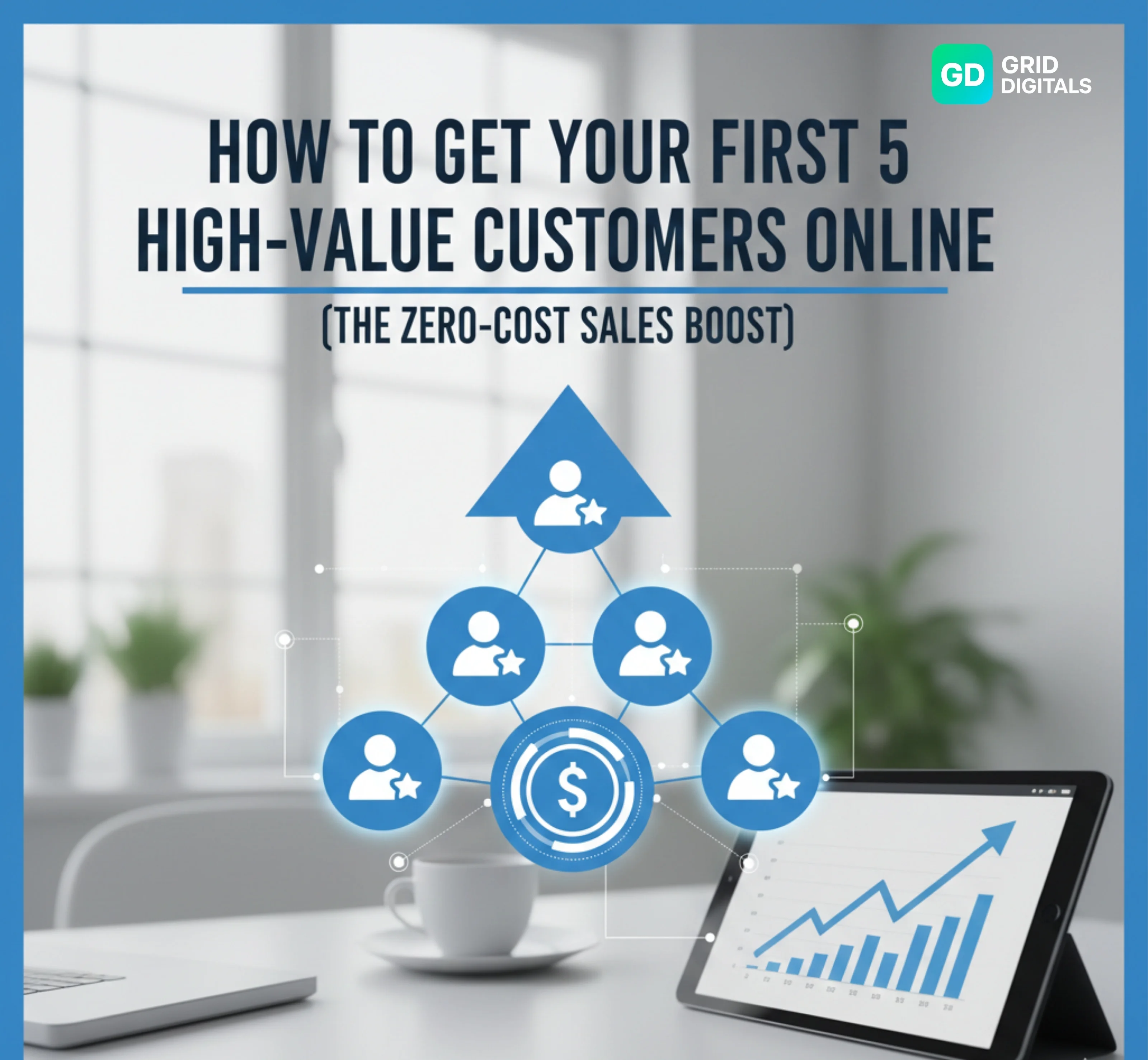
If you haven’t secured your first sales yet, check and complete the foundation first: How to Get Your First 5 High-Value Customers Online (The Zero-Cost Sales Boost)
Pre-Scale Validation Checklist: Are You Ready for Targeted Traffic?
Before investing even a small budget into paid or targeted traffic, your digital system must pass a simple readiness check. This protects your ROI and prevents wasted ad spend.
Confirm the following:
- Your Low-Friction Offer (LFO) has already converted organically.
- You can clearly explain your value proposition in one sentence.
- Your landing page loads fast and works perfectly on mobile.
- You have a defined follow-up process (email or DM).
If any of these elements are missing, pause scaling. Targeted traffic amplifies systems — it does not fix broken ones.
Part I: The Rule of Funding — Using Profit to Fuel Phase Two
Scaling your digital system requires adherence to the Rule of Funding. This is where most businesses fail — not because their ads don’t work, but because they fund growth the wrong way.
The Rule of Funding is simple but non-negotiable: you only use profit generated by your existing system to pay for new customer acquisition.
This rule ensures that targeted traffic remains a controllable investment, not a financial liability that creates pressure and panic.
The Budget Philosophy: Invest in the Proven Path
Before spending even ₦1 on traffic, you must define what success looks like inside your system.
- Define Your CPA Goal:
If your Low-Friction Offer (LFO) generates $50 in profit, your target Cost Per Acquisition (CPA) should fall between $20–$30.
This margin protects your business while giving you room to optimize and scale. Any ad spend above your profit threshold turns growth into risk.
- Small Budget, Big Focus:
A limited daily budget — for example $5–$10 per day — forces precision. You cannot afford to target broad or vague audiences.
This constraint is a strategic advantage. It enforces clarity, relevance, and discipline — the exact traits required for high ROI marketing.
- Zero-Cost Foundation:
All paid efforts must be built on a strong base of organic traffic and system-driven website growth. Paid traffic accelerates a working system — it cannot replace one.
Paid traffic should feel boring, predictable, and measurable. If it feels stressful or random, the system is not ready to scale.
Part II: The Tracking Imperative — Why Phase Two Demands Perfect Data
In Phase Two, guesswork becomes expensive. When you are working with a small, controlled budget, every decision must be driven by data — not assumptions.
Perfect data is non-negotiable. It is the only way to maximize conversions, protect your budget, and know exactly which marketing channel is producing real sales.
Without accurate tracking, paid traffic turns into blind spending. With tracking, it becomes a predictable growth engine.
1. The Power of UTM Parameters (Tracking Source Predictability)
UTM parameters are the simplest and most powerful zero-cost tracking tool available. They allow you to connect every click directly to performance.
By using clearly labeled UTM links — for example: facebook-retargeting-lfo-august — you can instantly see which traffic source, campaign, or audience is generating results.
This creates marketing accountability. You stop asking, “Are ads working?” and start answering, “This exact link generated this exact sale.”
Keyword Focus:
UTM tracking, marketing accountability, data integrity, ad spend optimization, improving website traffic.
2. Setting Up Conversion Goals in GA4
Before launching any paid campaign, your analytics must already be configured to track outcomes — not just visits.
In Google Analytics 4 (GA4), define conversion events for the actions that matter:
- Lead capture (form submissions, sign-ups)
- Low-Friction Offer (LFO) purchase
These conversion goals allow you to calculate your true Cost Per Acquisition (CPA) and identify exactly which targeted traffic channel delivers the highest conversion rate.
Never launch ads without conversion tracking. Traffic without measurement is not marketing — it is uncontrolled spending.
Part III: Targeted Traffic Channel 1 — High-Intent Google Ads
When working with a tight budget, not all traffic is equal. Google Search Ads are the best starting point because they capture high-intent leads — people who are actively searching for a solution.
This is not interruption-based marketing. It is demand capture. You are placing your offer directly in front of someone who already wants help.
Strategy: Buyer-Intent Keyword Domination
The biggest mistake beginners make is targeting broad keywords. Broad terms are expensive, competitive, and unfocused — especially dangerous on a small budget.
To run a profitable digital ad campaign with limited spend, you must focus on long-tail, buyer-intent keywords that connect directly to your Low-Friction Offer (LFO).
Examples of Buyer-Intent Keywords:
“affordable website audit for small business”
“freelance copywriter for LinkedIn”
“30 minute business system audit”
These searches may have lower volume, but they carry a dramatically higher probability of conversion. This is how paid traffic supports sustainable website growth instead of draining your budget.
The System Advantage of High-Intent Search Traffic
High-intent Google Ads work because they align perfectly with a proven conversion system. You are not convincing people they have a problem — you are simply presenting a solution at the exact moment they are looking for one.
This creates a predictable path: Search → Click → LFO → Conversation → Conversion.
The 4 Targeting Strategies for Small Budgets
To maximize ROI and protect your spend, your targeted traffic strategy must follow these four principles:
- Intent Targeting (Google Search): Reach users based on the exact terms they are actively searching for.
- Location Targeting (PPC & Social): Show ads only within your service area to eliminate wasted clicks.
- Retargeting / Remarketing (Social): Re-engage visitors who have already interacted with your website.
- Custom Audience Targeting (Social): Target users from your existing email list or DM contacts.
Small budgets demand precision. These targeting strategies ensure your ads amplify a working system instead of compensating for weak conversion.
Part IV-B: Post-Click Conversion Handling — DMs, Email, and Speed
Getting targeted traffic is only half the equation. Conversion happens after the click. This is where most businesses lose money without realizing it.
A delayed or inconsistent response breaks momentum and causes interest to evaporate. Speed is not optional — it is a conversion multiplier.
Best Practices for Post-Click Follow-Up
- Respond within minutes, not hours: Leads who receive fast responses convert at significantly higher rates.
- Use saved replies: Maintain clarity, professionalism, and speed without repeating the same messages manually.
- Reinforce message alignment: Repeat the same promise made in the ad and landing page to prevent confusion and rebuild trust instantly.
When response speed is high and messaging is consistent, traffic does not leak after the click. Interest turns into conversation. Conversation turns into purchase.
Speed reinforces intent. The faster your system responds, the higher the probability of conversion — especially in retargeting campaigns.
Part V: Maximize Conversions — Optimizing the Landing Page System
Every element on your landing page must exist for one reason: to increase conversion probability. Anything that does not directly support this goal is friction.
When targeted traffic lands on a poorly structured page, even high-intent users hesitate. Optimization is not about design beauty — it is about decision clarity.
The Principle of Focus (One Page, One Objective)
A landing page receiving targeted traffic must have only one objective: selling the Low-Friction Offer (LFO). Multiple goals create confusion and lower conversions.
- Do not give users a reason to wander away from the offer.
- One clear CTA: The page should guide the visitor toward a single action — purchase, book, or message.
Above-the-Fold Credibility (Immediate Trust)
Visitors decide whether to stay or leave within seconds. The top section of your landing page must remove doubt instantly.
- Clear Promise: What exact result will the customer get from the LFO?
- Visible Price: Transparency reduces hesitation and builds trust.
- Primary CTA: The action button must be obvious and immediately clickable.
- Social Proof: Testimonials, results, or credibility markers should appear before the user scrolls.
When price, promise, proof, and action are visible immediately, friction drops and conversion intent increases. This is how you make targeted traffic work — without increasing ad spend.
Part VI: The System Feedback Loop — How to Scale Sustainably
Scaling is not about spending more money — it is about spending smarter. The System Feedback Loop ensures that every Phase Two investment leads to predictable, controlled growth instead of guesswork.
When data guides decisions, scaling becomes a repeatable process — not an emotional reaction to “what feels like it’s working.”
Analysis: What the Data Tells You
Your system must be reviewed weekly. These checks tell you exactly where to scale and where to stop.
- Check CPA vs. Target: Identify which platform is hitting your target Cost Per Acquisition. Scale what works. Pause or shut down what does not.
- Check Conversion Rate: Is your LFO page converting targeted traffic at 3–5% or higher? If not, fix the landing page before increasing spend (see Part V).
- Check Keyword Performance: Increase budget only on the exact long-tail keywords that have already generated sales.
This iterative feedback loop removes randomness, acts as a live validation of your system, and ensures scaling remains sustainable over time.
Part VI-B: Budget Scaling Math (Predictable Growth Formula)
Scaling is math — not emotion. Numbers, not hope, determine when you grow.
If:
- Your CPA: $25
- Your LFO Profit: $50
- Result: Every $100 spent should return approximately $200.
Only increase spend when this ratio remains stable. This is how small-budget marketers scale safely, protect ROI, and maintain growth predictability.
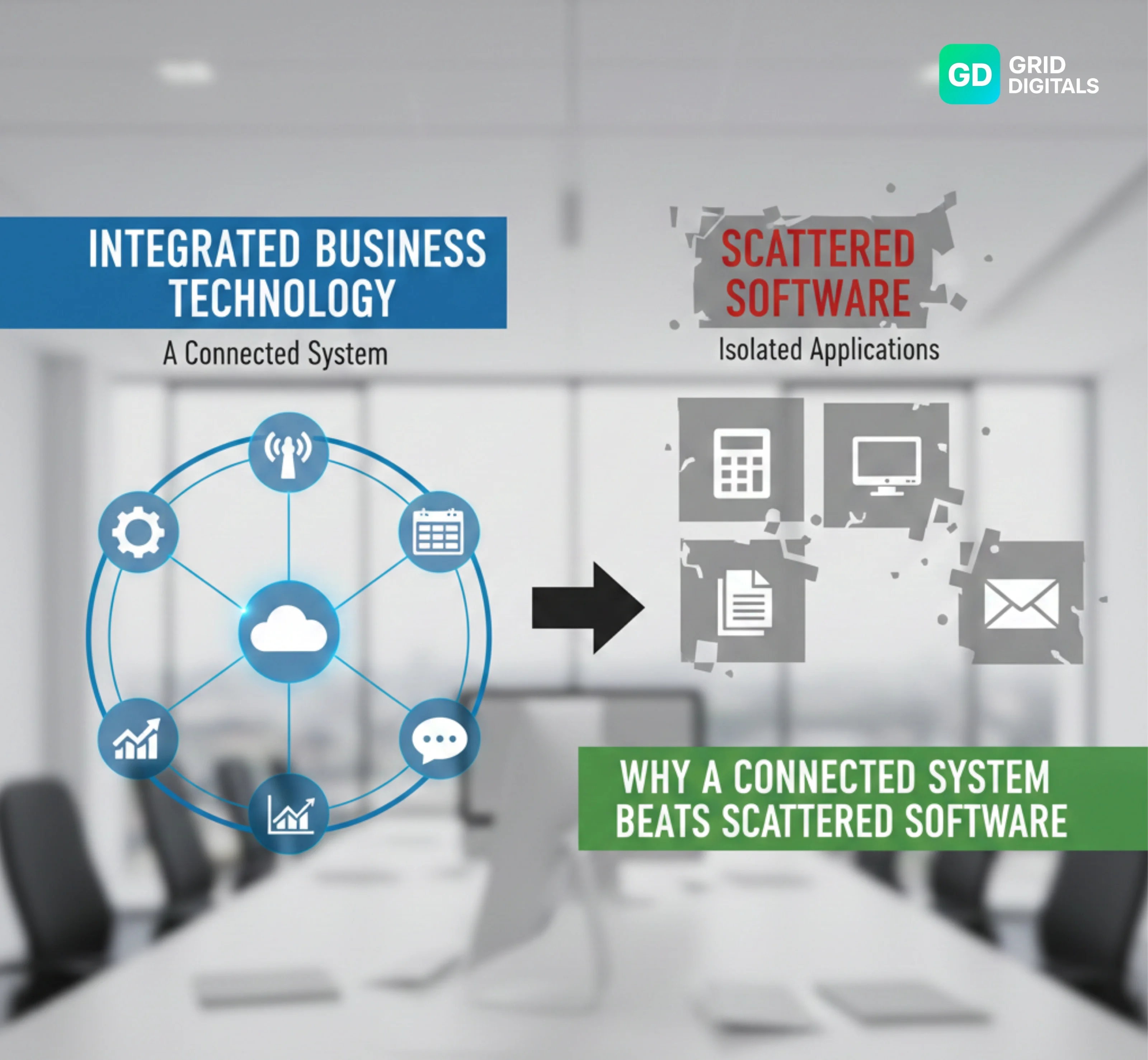
Paid traffic buys speed. Organic traffic builds resilience. A connected system uses both — intelligently.
Part VII: Organic Scalability — The Zero-Cost Traffic Multiplier
While paid traffic accelerates growth, organic growth sustains it. This is where your system compounds over time and reduces dependency on ads.
Organic scalability is not about chasing virality. It is about building durable visibility that continues to send qualified traffic to your website — for free.
1. E-E-A-T and Expert Content
Search engines reward content that demonstrates Experience, Expertise, Authority, and Trust (E-E-A-T). This is achieved by solving real customer problems with clear, actionable guidance.
High-performing expert content:
- Addresses a specific problem your audience is actively searching for
- Provides step-by-step, practical solutions — not theory
- Shows proof of real-world understanding and implementation
This approach increases website traffic organically, strengthens long-term search rankings, and helps your business or online store get noticed without paid ads.
2. Community and Engagement
Organic traffic is not built on search engines alone. Communities are powerful, zero-cost distribution channels.
Participate actively where your audience already spends time:
- Answer relevant questions in online communities and forums
- Share insights from your experience instead of promotional messages
- Link back naturally to high-value resources on your website (such as guides or lead magnets)
This strategy builds authority, trust, and referral traffic simultaneously. Over time, it becomes a reliable zero-cost method to drive consistent website traffic and support long-term growth.
Part VIII: The Final Optimization — A/B Testing and AI
To truly maximize conversions on a small budget, continuous improvement of your assets is non-negotiable. Optimization is how small systems outperform larger, unfocused competitors.
1. A/B Testing for ROI
A/B testing is the practice of showing two versions of an ad, headline, or call-to-action (CTA) to similar audiences to determine which performs better.
This is how you increase website traffic free — not by attracting more visitors, but by converting a higher percentage of the visitors you already have.
On a tight budget, you must always be testing:
- LFO headline (clarity and relevance)
- CTA button (language, urgency, and intent)
Even small conversion improvements compound over time and dramatically increase ROI without increasing ad spend.
2. AI (Leveraging It Correctly)
AI does not generate traffic directly. Its true value lies in increasing speed, accuracy, and decision quality.
When used correctly, AI helps you:
- Analyze competitors and identify positioning gaps
- Refine and expand long-tail, buyer-intent keywords
- Generate multiple ad copy variations for faster testing
This allows you to iterate faster than competitors and extract maximum efficiency from a limited budget.
Phase Two in One View
- Prove conversion before spending
- Use only profit to fund ads
- Track every click and conversion
- Start with intent → retarget → scale
- Increase spend only when the math holds
Conclusion: The Path to Predictable Growth
You are no longer a beginner hoping for sales; you are a system owner optimizing a machine.
By implementing targeted traffic only after proving your conversion system works, you turn marketing spend from a cost into a measurable, scalable investment.
This systematic approach ensures every dollar spent generates positive ROI, guaranteeing you can scale your digital system sustainably—without gambling.
Frequently Asked Questions (FAQ) — Targeted Traffic & Small Budgets
Answers to common questions about scaling with paid and targeted traffic on a small budget.
What is targeted traffic in digital marketing?
Targeted traffic refers to visitors highly likely to purchase your product or service because they match your ideal customer profile, have demonstrated buyer intent (e.g., searching a specific keyword), or are located in your service area. It is the opposite of broad, untargeted traffic.
Is Google Ads worth it with a small budget?
Yes, if executed systematically. For a small budget, Google Ads are worth it only if you focus exclusively on high-intent, long-tail keywords (Part III) and meticulously track conversions in GA4 (Part II). This minimizes waste and ensures your tight budget generates profitable leads.
What are the kinds of traffic in digital marketing?
Traffic is broadly classified into four main kinds: 1) Direct Traffic (users typing your URL), 2) Referral Traffic (links from other sites), 3) Organic Traffic (unpaid search engine results), and 4) Paid Traffic (traffic from ads). Success requires optimizing all four.
What are the 4 targeting strategies?
The four essential targeting strategies for a small budget are: 1) Intent Targeting (what they search), 2) Location Targeting (where they are), 3) Retargeting (who has visited your site), and 4) Custom Audience Targeting (who is already on your list).
How does this help me get people to buy from my website?
This system guarantees sales predictability by ensuring your targeted traffic hits an optimized conversion system (LFO and follow-up). You focus your small budget only on high-intent leads who are ready to purchase, turning traffic into profit.
How would you create a digital ad campaign on a tight budget?
A campaign on a tight budget must prioritize Retargeting (Part IV) and Long-Tail Search Ads (Part III). It requires perfect tracking (Part II) to eliminate ad waste and constant A/B testing (Part VIII) to maximize the return on every dollar spent.
What is the 3-3-3 rule in marketing?
While variations exist, a common interpretation is the Rule of Repetition (e.g., 3 channels, 3 types of content, 3 retargeting touches). In this system, it emphasizes the Consistency (Part V) needed for follow-up and the importance of using multiple touchpoints to secure a conversion from a high-value lead.